
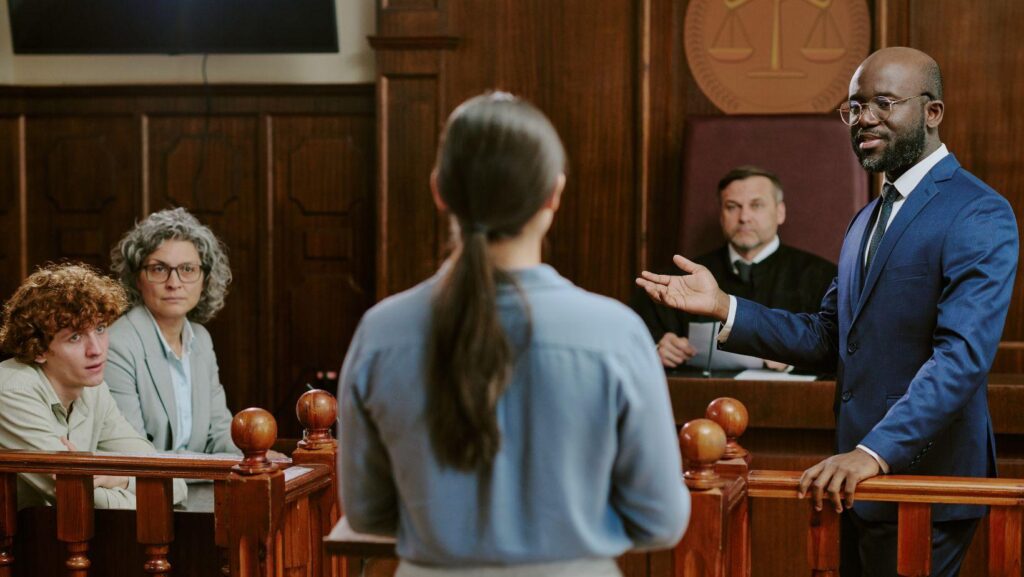
Personal injury claims involve multiple types of evidence, like photographs, medical records, accident reports and statements from participants – these sources are not always consistent. Discrepancies exist because participants remember events in various ways, documents contain restricted information or participants failed to record specific details at the accident scene. Witnesses provide an additional perspective that clarifies disputed circumstances.
Observers often view an event from a different location than the participants – this perspective provides information regarding the time immediately before, during or after an accident. For instance, a bystander who saw a collision might notice traffic patterns, vehicle movements or actions that drivers did not see – this information is relevant when available evidence is incomplete.
Establishing the Sequence of Events
Witnesses provide details that help determine how an injury occurred. Their observations include where participants stood, how the accident happened or what conditions existed. In a slip and fall case, a bystander might describe the state of a walkway before a fall. In a motor vehicle collision, a witness might describe the positions and movements of vehicles shortly before impact.
These observations are particularly important when participants provide different versions of an event. A witness is useful even if they are a stranger to the participants. Legal teams compare witness accounts with photographs, physical evidence and records to check for consistency. The value of a statement is dependent on what the bystander saw and the specific conditions during the observation.
Assessing the Reliability of a Witness
Not every witness account resolves a dispute – Memories change over time and a witness may have had a restricted view of the incident. Specific factors like distance, lighting, weather, distractions and the speed of the event affect what a bystander is able to observe. Witnesses sometimes misunderstand what they saw. For these reasons, statements are most effective when evaluated alongside other evidence.
The timing of a statement is also significant – Information recorded soon after an accident captures details while the event is clear in the mind of the witness. It is helpful to save contact information so that the bystander is reachable if their evidence is necessary later. Witnesses must provide their own honest recollections instead of adopting the version of another participant.
Comparing Different Evidence
Legal teams compare witness accounts with other evidence to identify points of agreement or disagreement. Medical records establish the nature and timing of injuries, while photographs show the physical state of a location. Surveillance footage, vehicle damage and official reports provide additional information. A statement that aligns with multiple independent sources helps clarify a disputed point, though each piece of evidence requires an individual evaluation.
When evidence is inconsistent, legal professionals examine the circumstances of each source. A client who meets with personal injury lawyer Brampton after an accident provides information about witnesses, photographs, medical treatment and other records. A client who works with a car accident lawyer identifies bystanders who saw the collision. Comprehensive information allows the legal team to understand how different sources relate to the claim.
Preserving Information From Witnesses
Witness information is difficult to obtain if a long period of time passes after an accident. Bystanders move, change phone numbers or struggle to recall specific events months or years later. Recording names and contact information is therefore helpful. It is also important to save any communications that identify an observer, especially when that observer has relevant information.
Observers benefit from the legal process – offering individual descriptions of observed events – these witnesses are more effective when they avoid feeling required to provide a specific narrative. If an individual recalls only a small portion of an event, it is best that they state these limits rather than speculate on unknown details. Reliability is higher when testimony provides context without including details that the observer did not directly see.
Conclusion
Individuals who observe an accident assist in resolving contradictory data – these witnesses provide descriptions that investigators compare with medical records, photographs and formal reports. The importance of an account is dependent on the visual perspective of the observer, the clarity of the event plus the consistency of the statement when compared to other evidence. Maintaining accurate contact details and ensuring that statements reflect authentic recollections are practices that result in a comprehensive record of the incident but also the relevant environment.