
Many think that pursuing a healthcare career requires years of schooling, mountains of debt, and a long wait before you actually touch a patient. However, becoming a certified nursing assistant (CNA) can place you on the front lines of care quickly, meaningfully, and realistically.
This pathway doesn’t trap you in one role. A well-designed CNA program can be the doorway to the wider nursing profession. You gain foundational skills, professional confidence, and real clinical exposure before committing to longer education.
This article walks you through how training works, what certification involves, how to handle common obstacles, and how CNA experience can fuel long-term career growth.
What You’ll Learn as a CNA Student
Once you begin a certified nursing assistant training program, you quickly discover that the role is far more technical than many people assume. You learn structured, professional, and legally grounded care practices that protect both you and the people you serve.
You become well-versed in medical terminology so that you can understand charts, instructions, and conversations among healthcare teams. Learning about the Health Insurance Portability and Accountability Act or HIPAA laws and the Americans with Disabilities Act teaches how you manage patient privacy and support individuals with different physical and cognitive needs. You also receive in-depth training on infection control measures, a critical skill that keeps patients, families, and staff safe.
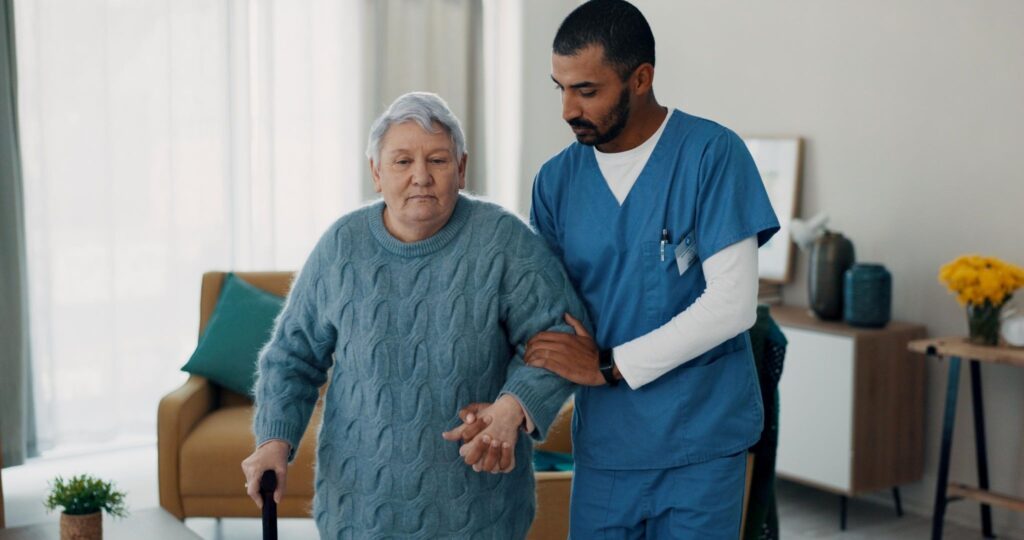
Much of your education focuses on core patient care skills. You practice proper body mechanics to prevent injuries when lifting or repositioning patients. You learn how to assist with activities of daily living, including bathing, dressing, toileting, and eating, while maintaining dignity and respect.
You also receive instruction in rehabilitative and restorative care, which means helping patients regain strength, mobility, and independence rather than simply doing tasks for them. This mindset shifts you from being a helper to being a supporter of recovery and autonomy.
By the time you complete this phase of training, you begin to see yourself not as “just an aide,” but as a valued member of a healthcare team.
Inside the CNA Lab and Your Real Clinical Experience
After classroom learning, you step into the CNA lab, designed to look and function like a miniature healthcare setting. You practice on hospital beds, use real medical equipment, and role-play scenarios that mimic what you’ll encounter in actual facilities. You also learn how to take vital signs accurately, chart observations, and communicate clearly with other caregivers.
Once you’ve demonstrated basic competence in the lab, you move into clinical instruction in real healthcare settings. This is often the most transformative part of training. You work in nursing homes, assisted living centers, hospitals, or a long-term facility, caring for real people with real needs.
You shadow experienced nursing aides and nursing attendants, observing how they interact with patients, manage time, and handle emotionally challenging situations. You quickly learn that technical skill matters, but so does kindness, patience, and clear communication.
How Support Can Change Everything
You may face practical obstacles that feel heavier than the coursework itself. Tuition costs can be intimidating, especially if you’re not sure this career is right for you yet. Transportation to a CNA school, uniforms, textbooks, background checks, and lost wages while in training can add up quickly. For some people, these pressures make healthcare feel out of reach before they even apply.
You might also worry about meeting clinical requirements, passing the state exam, or balancing training with personal responsibilities. If you don’t currently hold a high school diploma, the idea of enrolling in formal training can feel even more daunting. Add in waiting lists at popular programs, and the process can start to feel discouraging.
Structured support makes a real difference. Many community colleges, hospitals, and workforce education programs partner with employers to reduce financial strain. Some facilities sponsor students directly, covering tuition in exchange for a short work commitment after graduation. Alongside this, financial aid options, grants, and local workforce initiatives can help cover fees.
Within this context, you may encounter CNA scholarship opportunities that target students who show commitment to caregiving but lack resources. These scholarships expand access, diversify the workforce, and make healthcare careers realistic for people from all backgrounds.
From Training to Testing — Your Path to Certification
Completing your training is a major milestone, but your journey isn’t finished until you pass the certification exam. This step is what officially transforms you from a trainee into a recognized professional.
Most states require you to take a certification competency exam, which typically includes two parts: a written (or oral) test and a skills demonstration. The written portion assesses your understanding of medical concepts, ethics, infection control, and patient rights. The skills portion requires you to physically perform tasks you practiced in the CNA lab, such as assisting with transfers, taking vital signs, or providing personal care.
Many states use the NNAAP Exam (National Nurse Aid Assessment Program), a standardized national assessment. Some administer their own state exams, such as the Georgia CNA test or the Michigan Nursing Assistant Test, but the structure is similar across the country. Regardless of location, the goal is the same: proving that you can provide safe, competent, and compassionate care.
Once you pass, you earn your Certified Nursing Assistant Certificate. It’s your official entry ticket into the healthcare workforce. Your name is added to your state’s registry, and employers can verify your credentials.
With certification in hand, new doors open quickly. Facilities that once saw you only as a student now view you as a trained professional. You become eligible for paid positions in hospitals, rehabilitation centers, home health agencies, and long-term care settings.
Workforce Demand in Perspective
Healthcare in the United States is aging, and with that reality comes an increasing need for hands-on caregivers. Hospitals are expanding, home health services are growing, and nursing homes continue to rely heavily on skilled assistants.
Estimates from the Bureau of Labor Statistics reveal that healthcare facilities need approximately 211,800 nursing assistants and orderlies yearly. This figure means steady employment opportunities in the field. Whether you live in a major city or a rural community, chances are high that a hospital, rehabilitation center, or long-term facility near you is hiring.

Career Pathways Beyond Basic CNA Roles
Your work as a CNA can branch in many directions. Some paths keep you close to bedside care, while others move you toward technical, rehabilitative, or leadership roles. Below are the most common and realistic possibilities.
Patient Care Support Aid
You remain deeply involved in daily care but work more closely with nurses, therapists, and case managers. The role often includes more documentation, care coordination, and patient monitoring responsibilities.
Patient Care Tech (PCT)
You typically work in hospitals and may assist with EKGs, telemetry monitoring, specimen collection, or basic lab-related tasks. This role blends CNA skills with entry-level medical technology exposure.
Acute Care Technician
You support critically ill or post-surgical patients in fast-paced hospital units. The work requires sharper observation skills, quicker responses, and strong teamwork with nurses and physicians.
Rehabilitation Aide
You assist physical and occupational therapists with mobility exercises, gait training, and recovery activities. Your focus shifts from basic care to helping patients regain independence after injury or illness.
Home Health Aide
You provide one-on-one care in patients’ homes rather than in facilities. This role builds strong personal relationships and requires independence, judgment, and adaptability.
Hospice Aide
You support patients at the end of life with comfort-focused care, dignity, and emotional presence. Compassion, communication, and sensitivity become your most important tools.
Medication Aide (where allowed by the state)
With additional training, you can administer certain medications under nurse supervision. This role increases responsibility while still keeping you in direct patient care.
Dialysis Technician (entry pathway)
Some CNAs transition into dialysis clinics, assisting with patient preparation and machine monitoring. It offers a specialized, technical route within healthcare.
Unit Clerk or Monitor Technician
You move partially away from bedside care into scheduling, records, and monitoring heart rhythms on telemetry screens. It’s ideal if you enjoy organization and clinical detail.
Phlebotomy Technician
You specialize in drawing blood and handling specimens for labs. This is a focused technical skill that can pair well with your patient interaction experience.
EKG/Telemetry Technician
You learn to read heart monitors and alert nurses to abnormalities. The role is critical in cardiac and critical care settings.
Surgical Aide / Operating Room Assistant
You help prepare patients, equipment, and rooms for procedures. This exposes you to the surgical environment without becoming a nurse.
Mental Health Technician
You support patients in behavioral health or psychiatric settings. Communication, de-escalation, and empathy are central to this role.
Memory Care Specialist
You deepen your expertise in caring for individuals with Alzheimer’s disease and other dementias. You focus on safety, communication strategies, and emotional well-being.
Lead CNA / Charge CNA
You supervise other nursing aides, coordinate assignments, and serve as a bridge between staff and nurses. This is your first step into leadership.
CNA Instructor or Clinical Mentor
You train new students in the CNA lab or during clinical instruction. You pass on your experience while staying connected to education.
Staffing Coordinator (entry-level pathway)
You help schedule shifts and manage staffing needs in facilities. Your frontline experience makes you particularly effective in this role.
Care Coordinator Assistant
You assist nurses or social workers in organizing patient services, discharges, and follow-ups. It blends clinical insight with administrative skills.
LPN/LVN (Licensed Practical/Vocational Nurse)
Many CNAs move into this shorter nursing program while working. Your hands-on background gives you a major advantage in training.
Registered Nurse (RN – ADN or BSN pathway)
Your CNA experience strengthens your application and makes clinical coursework feel more intuitive. You enter nursing already fluent in patient care realities.
Respiratory Therapy (future pathway)
Some CNAs transition into allied health fields like respiratory care, working with ventilators and breathing treatments after further study.
Physical Therapy Assistant (PTA) or Occupational Therapy Assistant (OTA)
Your rehab exposure as a CNA can prepare you for these associate-degree programs. You help patients recover mobility and daily function.
Healthcare Administration (long-term pathway)
With further education, some CNAs move into management, quality improvement, or facility operations. Your frontline perspective becomes a major asset in leadership.
Holding a Certified Nursing Assistant Certificate, passing your certification competency exam, and maintaining good standing on your state registry all count as industry-recognized credentials that strengthen your resume.
Some CNAs specialize rather than leave the role entirely. Many facilities are investing more in training, retention bonuses, and career ladders because they understand how essential CNAs are to quality care. Employers increasingly prioritize strong patient care skills, professionalism, and reliability over years of experience.
Balancing Real Life While You Build Your Career
Some employers hire newly certified aides full-time immediately, while others offer part-time or per-diem shifts that let you ease in gradually. Many facilities also provide workplace essential courses—short in-house trainings on topics like documentation, advanced transfers, or dementia care—that help you keep growing without returning to a classroom.
If you plan to move up the healthcare ladder, you might find yourself studying and working at the same time. Plenty of CNAs enroll in evening or weekend tracks for a nursing program while keeping their day job in a hospital or long-term facility.
It’s demanding, but your hands-on CNA experience often makes your coursework feel more real and easier to connect to practice. If a program has a waiting list, many schools will keep you engaged through preparatory workshops, tutoring, or refresher modules so you don’t lose momentum before classes begin. Strong support services—advising, career coaching, and sometimes childcare or transportation assistance—can make the difference between quitting and persevering.
Your Path Starts With One Step
Starting as a CNA doesn’t limit you; it grounds you. You enter healthcare through the most human doorway possible: direct care. You learn what patients truly need, how systems function, and where you personally want to make an impact.
But it takes more than completing a course or passing a test. It’s a commitment to compassion, competence, and connection. Through a structured certified nursing assistant training program, hands-on CNA lab practice, and meaningful clinical work in nursing homes or hospitals, you gain skills that matter every single day.
Your foundation in direct patient care will always serve you well, whether you remain a CAN or move into advanced roles within the nursing profession. What matters most is that you begin with purpose. So, don’t just collect credentials; build lasting relationships, real skills, and confidence in a field that genuinely needs you. Your journey can start sooner than you think, and it can take you much farther than you imagine.