
Modern lifestyle platforms like Important Cool often explore how everyday environments shape the way we live, relax, and grow. One area gaining renewed attention is outdoor play, not just as a nostalgic activity, but as a crucial foundation for childhood development and family wellbeing.
In a world dominated by screens and structured schedules, thoughtfully designed outdoor play spaces are becoming essential. They’re no longer just about keeping kids occupied; they’re about nurturing independence, creativity, and physical health in ways that indoor environments often can’t replicate.
Why Outdoor Play Matters More Than Ever
Children today spend significantly less time outdoors than previous generations. Yet research consistently shows that outdoor play is vital for physical, emotional, and cognitive development.
Activities like climbing, swinging, running, and balancing help children build coordination and strength while improving overall fitness. At the same time, outdoor environments stimulate imagination and problem-solving skills in ways structured indoor play cannot.
Beyond physical benefits, outdoor play also supports mental well-being. Natural environments reduce stress, boost mood, and encourage children to take manageable risks, helping them build confidence and resilience.
In short, outdoor play isn’t just “free time”, it’s a critical part of growing up.
The Evolution of the Backyard Play Space
The idea of a backyard play area has evolved significantly. What was once a simple swing set or open lawn is now being reimagined as a multifunctional, engaging environment.
Today’s parents and designers are focusing on:
- Active play zones that encourage movement
- Creative spaces that spark imagination
- Flexible layouts that grow with the child
- Aesthetic integration with modern outdoor living
The goal is to create a space that feels like a natural extension of the home, one that encourages children to step outside voluntarily rather than being told to.
Designing for Movement and Exploration
One of the most important elements of any outdoor play space is movement. Children learn best when they are physically engaged, and the design of the space should reflect that.
Incorporating features like climbing structures, swings, and balance elements encourages a wide range of physical activities. These setups allow children to test their limits safely while developing coordination and strength.
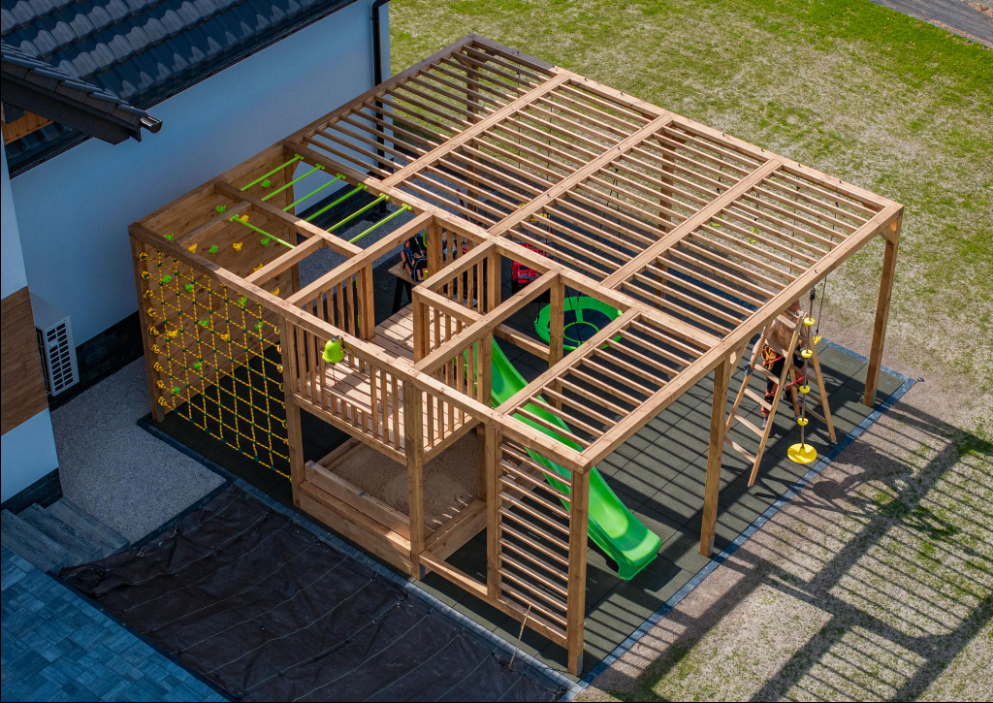
For example, well-designed Climbing frames with swings offer a combination of activities in a single structure, supporting everything from upper-body strength to spatial awareness and social play.
Rather than isolating activities, combining multiple play elements in one area creates a more dynamic and engaging environment that keeps children interested for longer periods.
Encouraging Imagination Through Open-Ended Play
While physical activity is essential, imaginative play is equally important. Open-ended environments, where children can create their own games and narratives, help develop creativity, storytelling skills, and independent thinking.
Simple additions can make a big difference:
- Natural materials like sand, wood, and water
- Flexible structures that can become forts, ships, or castles
- Open spaces that allow free movement and invention
The key is to avoid over-structuring the environment. When children are given the freedom to explore, they naturally create richer and more meaningful play experiences.
Balancing Safety with Adventure
A common challenge in designing outdoor play spaces is finding the right balance between safety and risk. While safety is essential, eliminating risk can limit a child’s ability to learn and grow.
Small, manageable challenges, like climbing slightly higher or swinging a bit faster, help children develop:
- Risk assessment skills
- Confidence in their abilities
- Problem-solving strategies
The goal isn’t to remove risk entirely, but to design environments where children can safely explore their limits.
Creating Spaces That Grow With Your Child
One of the biggest mistakes in play space design is creating something that children quickly outgrow. A well-designed outdoor area should evolve alongside the child.
To achieve this, consider:
- Modular elements that can be expanded or reconfigured
- Multi-use structures that serve different age groups
- Durable materials that withstand years of use
This approach not only extends the lifespan of the play space but also ensures continued engagement as children’s interests and abilities change.
Integrating Play Into Everyday Life
The most successful outdoor play spaces are the ones that become part of daily routines. Instead of being a separate “play area,” they are seamlessly integrated into the home environment.
Positioning play spaces near patios, gardens, or communal areas encourages more frequent use. When children can easily transition between indoor and outdoor spaces, they are more likely to choose active play over passive entertainment.
This integration also allows families to spend more time together, whether it’s supervising play, joining in activities, or simply enjoying the outdoor setting.
The Bigger Picture: Play as a Lifestyle Choice
Designing a great outdoor play space isn’t just about equipment or layout; it’s about prioritizing a lifestyle that values movement, creativity, and connection.
Incorporating outdoor play into daily life helps children develop healthy habits early on. It also creates opportunities for families to reconnect with nature and each other.
As modern living continues to evolve, the importance of intentional, well-designed play environments will only grow. They represent more than just a place to play; they are spaces where children build the skills, confidence, and memories that shape who they become.
Final Thought
In a fast-paced, digitally driven world, creating a dedicated outdoor play space is one of the simplest yet most impactful decisions a family can make. By designing environments that encourage exploration, movement, and imagination, we give children something invaluable: the freedom to grow naturally, one adventure at a time.