
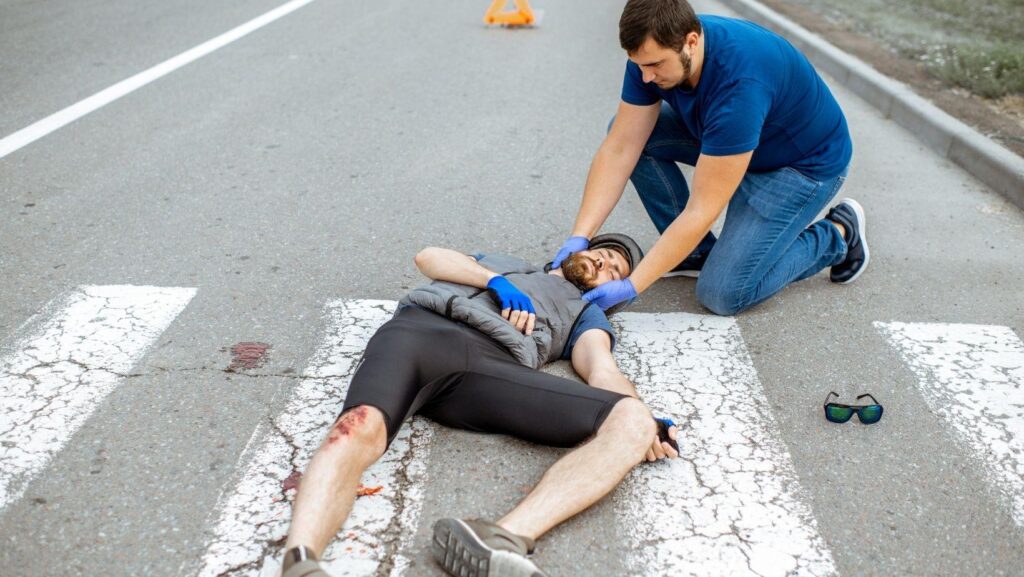
Pedestrian accidents at crosswalks leave victims with some of the most severe injuries seen in personal injury cases. Broken bones, traumatic brain injuries, and spinal damage are common outcomes when a human body meets a moving vehicle. The physical recovery is hard enough without also fighting an insurance company that is already working to minimize your claim.
Oklahoma law gives pedestrians specific rights at crosswalks, but those rights come with conditions that insurers are very good at exploiting. Whether you were in a marked crosswalk, whether the signal was in your favor, and whether the driver had time to stop all become factors in determining fault. The details of your specific crossing matter enormously to the outcome of your case.
How Oklahoma Defines Right-of-Way at Crosswalks
Oklahoma law requires drivers to yield to pedestrians lawfully within a crosswalk. That obligation applies to both marked crosswalks and unmarked ones, which exist at every intersection where two roads meet. Many drivers do not realize unmarked crosswalks carry the same legal protections as marked ones. That misunderstanding is one reason crosswalk collisions happen as often as they do in Tulsa.
The law also places responsibilities on pedestrians. A pedestrian cannot suddenly step into the path of a vehicle that cannot reasonably stop in time. That provision is frequently used by insurance companies to shift blame onto the injured pedestrian. Understanding both sides of the equation helps you anticipate how the opposing party will frame their defense.
The Role of Traffic Signals in Establishing Fault
Traffic signals add another layer of complexity to crosswalk collision cases. When a pedestrian crosses on a walk signal and is struck by a driver running a red light, fault is generally clear. But most real-world cases involve turning movements, disputed signal timing, or poorly designed intersections that complicate the analysis significantly.
A personal injury attorney in Tulsa will investigate signal timing data and request available traffic camera footage. Signal timing records are maintained by the city and can be obtained through formal legal channels. That data often tells a very different story than what the driver claims to remember.
Evidence That Determines Right-of-Way After a Collision
Establishing right-of-way requires building a case from multiple evidence sources. No single piece of evidence tells the complete story on its own. Here are the most important types of evidence used to determine fault in Tulsa pedestrian accident cases:
- Traffic and surveillance camera footage from nearby businesses, traffic systems, and dashcams captured the collision.
- Signal timing data obtained from the city showed what phase the signal was in at the time of the crash.
- Skid mark analysis reveals whether and when the driver applied brakes before impact.
- Witness statements from people who observed the pedestrian’s position and the driver’s behavior.
- Vehicle event data recorder information captures speed, braking, and steering inputs before impact.
- Police report narrative documenting the responding officer’s assessment and any citations issued.
Each source adds clarity that makes the right-of-way determination harder for the defense to dispute.
How Insurance Companies Shift Blame Onto Pedestrians
Insurance adjusters are trained to find any pedestrian behavior that reduces the driver’s share of fault. They will ask whether you were on your phone, wearing dark clothing, or whether you waited for the full walk signal before stepping off the curb. Each question is designed to build a contributory negligence argument against you.
Oklahoma follows a modified comparative fault system. Your compensation is reduced by your percentage of fault. If an insurer argues you were 25 percent responsible, your settlement drops by that same amount. Being represented by an attorney who anticipates these tactics is the most effective protection you have.
Special Circumstances That Complicate These Cases
Not all crosswalk collisions fit neatly into a standard right-of-way analysis. Hit-and-run accidents leave victims without an identified driver, shifting the focus to uninsured motorist coverage. Multi-vehicle collisions involve shared fault among drivers that takes detailed reconstruction work to untangle.
Accidents at poorly maintained crosswalks raise a separate question about municipal liability. If Tulsa failed to maintain adequate signage or functioning signals, the city itself may share responsibility. Pursuing a claim against a government entity involves strict notice deadlines that differ significantly from a standard personal injury claim.
The Long-Term Impact of Pedestrian Accident Injuries
Crosswalk collision injuries are rarely minor. Even low-speed impacts can produce life-altering consequences for a pedestrian. Traumatic brain injuries can affect cognition and memory for years. Orthopedic injuries often require multiple surgeries and extended rehabilitation that continues long after the initial hospitalization.
The financial impact compounds quickly. Lost wages, reduced earning capacity, and long-term therapy costs add up to damages that far exceed initial settlement offers. Building a case that accounts for future costs requires expert testimony from medical and economic professionals. Accepting a quick settlement without that analysis almost always means leaving significant compensation behind.
Steps to Take Immediately After a Tulsa Crosswalk Collision
The actions taken immediately after a crosswalk collision directly impact the strength of your legal claim. Call 911 and stay at the scene until law enforcement arrives and documents everything officially. If you are physically able, photograph the crosswalk, the vehicle, your injuries, and any signals or surveillance cameras nearby.
Collect the driver’s information and identify witnesses before they leave. Seek medical attention right away, even if your injuries seem manageable, because adrenaline masks pain, and some serious injuries do not present immediately. Never give a recorded statement to any insurance company before speaking with an attorney first.