
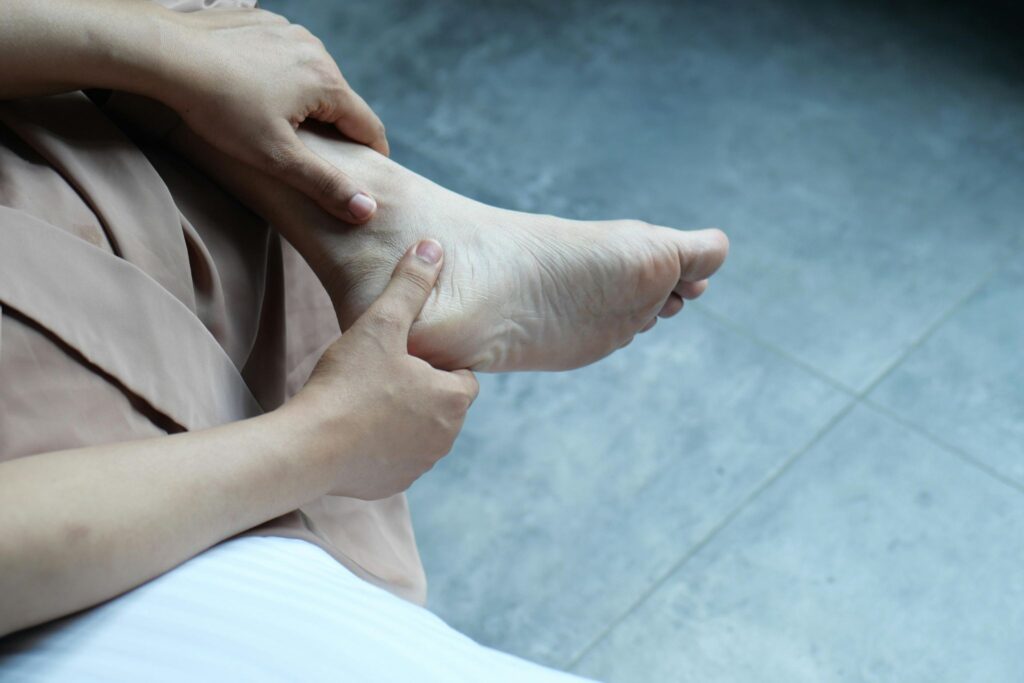
Most people ignore arch pain until it stops them in their tracks. What starts as a dull ache after a long day can quietly snowball into something that makes every morning miserable. The frustrating part? Arch pain rarely has one single explanation, and treating the wrong cause means the pain just keeps coming back.
Understanding what causes arch pain in your specific situation is what separates temporary relief from an actual fix. This guide breaks down the real reasons your arches hurt, including a few that most articles never bother to mention.
Plantar Fasciitis
Plantar fasciitis is the most common answer to what causes arch pain, and for good reason. The plantar fascia is a thick band of tissue connecting your heel to your toes, and when it gets repeatedly strained, it becomes inflamed and irritated.
The telltale sign is sharp heel pain with your very first steps in the morning. That happens because the fascia tightens during rest, then gets suddenly stretched the moment you stand up. Tight calf muscles, long hours on hard floors, and sudden spikes in activity are the usual triggers.
Not every case responds the same way, so arch pain treatment often requires some trial and error. Supportive shoes or custom shoe inserts can reduce strain on the fascia while it heals. Both help absorb shock during walking, which takes pressure off the inflamed tissue.
Before your feet even touch the floor in the morning, try flexing your toes upward while still lying down. That pre-stretches the fascia before it takes on your full body weight, which genuinely reduces that awful first-step pain.
Flat Feet vs. High Arches
Your arch shape has a bigger impact on pain than most people realize, and both extremes cause trouble in different ways.
Flat feet and fallen arches cause the arch to collapse inward with each step. The connective tissue gets overstretched, the ankle rolls, and the pain tends to feel diffuse and achy rather than sharp.
High arches create the opposite problem. A rigid, elevated arch can’t absorb shock well, so pressure concentrates in a narrow strip of the foot with every step. Arch supports can help distribute that load more evenly and reduce discomfort during daily activity.
What’s often overlooked is that the arch shape isn’t entirely fixed. Short-foot exercises and toe-spreading drills train the arch to function better under load. The structure you’re born with is one thing; how it performs is another.
Footwear Choices
Improper footwear is often what causes arch pain, and even expensive, well-cushioned options could be doing more harm than good.
Heavily cushioned shoes do the stabilizing work your foot muscles should be doing. Over time, those muscles weaken from the lack of use. High heel-to-toe-drop shoes shorten the Achilles tendon and calves. That extra tightness pulls harder on the plantar fascia with every stride.
Narrow toe boxes are another common culprit. When your toes get squeezed together, the foot can’t splay naturally, which shifts weight unevenly across the arch. If you’re thinking about switching to minimal or zero-drop shoes, don’t rush it. Increasing wear time by about 10 to 15 percent per week gives your muscles and tendons time to catch up.
Muscle Weakness and Tightness
Arch pain is often a downstream symptom of a problem situated much higher up the body. Weak hips, for example, cause the knee to cave inward during movement, which then rolls the ankle inward and collapses the arch with every step.
Tight calves and Achilles tendons are another root cause that gets missed constantly. Chronically shortened calves and tendons tug on the plantar fascia with every step. Stretching the calf is one of the simplest and most effective things someone with arch pain can do. Some people even use pain support products to ease discomfort while addressing muscle imbalances.
The intrinsic muscles inside the foot itself also matter. Physical therapy targeting these muscles can rebuild the strength needed to hold the arch’s shape dynamically under load. Sitting for long periods or relying on supportive shoes for years weakens them significantly.
Overuse and Load Errors
A lot of arch pain traces back to doing too much, too fast, without enough recovery. Common scenarios include:
- Starting a running program without a proper base
- A sudden jump in daily steps from a new job or travel
- Returning to high-impact exercise after a long break
A solid treatment plan should account for recovery time, not just active treatment. Avoid increasing your activity level by more than 10 percent per week, whether that’s mileage, time on your feet, or workout intensity. Pushing past those limits is also one of the fastest ways to end up with a stress fracture without even realizing it.
The surface you walk or run on matters just as much as how much you do, though that rarely gets mentioned. Concrete creates significantly more arch stress than grass or rubberized tracks. Rotating surfaces is a genuinely underused way to manage arch load without cutting back on activity.
Lesser-Known Causes
If your arch pain isn’t responding to the usual fixes, one of these might explain why.
Nerve compression along the inner ankle, as seen in tarsal tunnel syndrome, produces burning or tingling pain that radiates into the arch. It’s frequently mistaken for plantar fasciitis because the location is so similar.
Accessory navicular syndrome involves an extra bone on the inner midfoot that some people are born with. Custom orthotics can offload pressure from that area, though the problem is structural rather than soft tissue. It causes arch pain that simply won’t respond to plantar fasciitis treatments for that reason.
A stress fracture in the navicular or cuboid bones produces pain that worsens with activity. Ice packs can offer temporary relief while you wait for imaging. Unlike plantar fasciitis, the pain doesn’t ease much with rest. Nonsteroidal anti-inflammatory drugs can help manage the discomfort in the short term, but a proper diagnosis is still essential.
Systemic conditions like rheumatoid arthritis and gout can also first appear as arch pain. Arch supports may ease the load on affected joints. That said, pain in both feet or swelling that persists at rest warrants a proper medical evaluation.
Finding the Right Cause
What causes arch pain in one person isn’t necessarily what’s causing it in yours. The key is paying attention to the pattern: is it worse in the morning, or only during activity? Does it burn, ache, or stab? Both feet or one?
Those details point directly to the source. Rest and better footwear don’t always help. A podiatrist or sports medicine physician can catch anything structural or systemic that self-care won’t fix.