
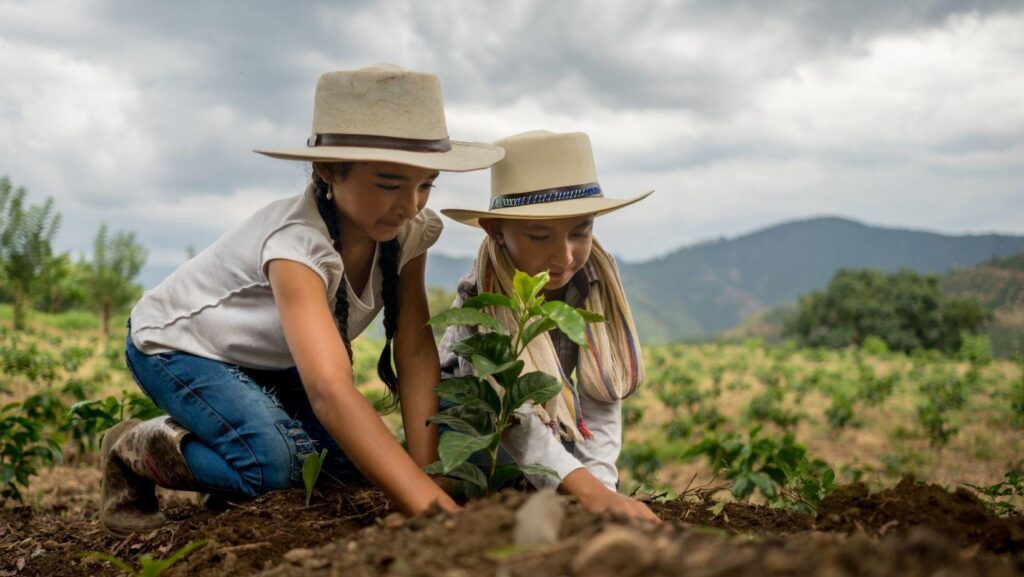
Life on a farm offers children a chance to learn responsibility through hands-on experiences. Instead of just being told how important it is to get work done, they see how their work helps animals, plants, machines, and other people. Farm activities that are appropriate for their age can teach them consistency, patience, awareness, and respect while giving them the opportunity to participate in family activities.
Start With Simple Responsibilities
Young children could start doing simple activities. The children will become aware that there is some work to be done by filling up the boxes, collecting eggs, checking on the plants, and cleaning. Parents should also teach children that all the chores are important and show them how each task should be done properly. If they do it the right way, children will not be swamped with the amount of work.
As the children will become more experienced in what they are supposed to do, parents should give them some harder chores. Children could check whether the animals have sufficient water or assist their parents while inspecting the cattle troughs. Taking care of the animals and doing other chores will make the children realize that animals are unable to do anything on their own and they need to depend on humans for that.
Teach Safety Through Daily Tasks
Safety must be a top priority in every aspect of the farm, especially with children and animals, equipment, tools and fences. Parents can teach the child about the limits by setting rules and showing how they should act, before letting him try. When a child is helping out with something simple, he should know where to be, where not to be, and who gets to do what. By saying it over and over until it is second nature, the child will understand the basic rules of being safe on the farm.
Buildings and structures can also be used to teach the child about being aware of their surroundings. By walking up to a cattle gate, the parent can talk to the child about why gates are important, and why they should not go anywhere near the animal without being told. Parents can also show the child what the equipment can and cannot be used for to give them a basic understanding of why the equipment is important for keeping the animals and humans safe. The parent can point out the exhaust fans in the barn and talk about how they help circulate air. This can lead into a lesson about not using any electrical equipment or motors without an adult.
Encourage Consistent Habits
Responsibility is easier for children to understand when chores are predictable. A child who regularly gets up early to check on animals discovers that responsibilities must be fulfilled regardless of the weather or more enticing activities. Children are also likely to understand the value of persistence if their attention is drawn to the task at hand. Parents must insist that children complete the task they have initiated before they turn their attention to another activity.
Consistency does not necessarily mean assigning the same tasks to children at all times. Parents should also increase the level of responsibility as children grow older and demonstrate some degree of maturity. Older children will likely be ready to take up more challenging tasks like caring for animals, gardening, housekeeping, or shopping. This builds confidence in young children since they are willing to do harder tasks as they become more responsible. Parents should allow children to operate at a level that makes it possible for them to demonstrate their increased responsibility.
Connect Work With Results
The examples of farm activities may be shown to demonstrate the results caused by the actions of various individuals. The children will realize that when they properly tend their crops, they will produce fruit, that animals will stay healthy provided that they are well-fed and properly tended and that everything will be neat when it is properly taken care of. At the same time, parents may make remarks concerning these issues without making it an issue.
Moreover, it is necessary to praise the kids' efforts when they do their job responsibly and thus let them know that they are on the right track. At the same time, sometimes it is necessary not to insist on perfection from the kids so that they could realize that you are doing so because this would be helpful to others. Parents may also say that they were able to do their task more easily thanks to the kids' contribution. In this case, children will understand that it is essential to be responsible and that although it often brings a lot of rewards, it is a good quality to be proud of themselves.
There are a lot of lessons that children can learn from activities conducted at the farms which cannot be learned using any other methods. Using the methods that include giving age-appropriate assignments, emphasizing safety, encouraging consistency, and linking efforts to results, parents can make sure that children learn a number of lessons from working at the farm.