
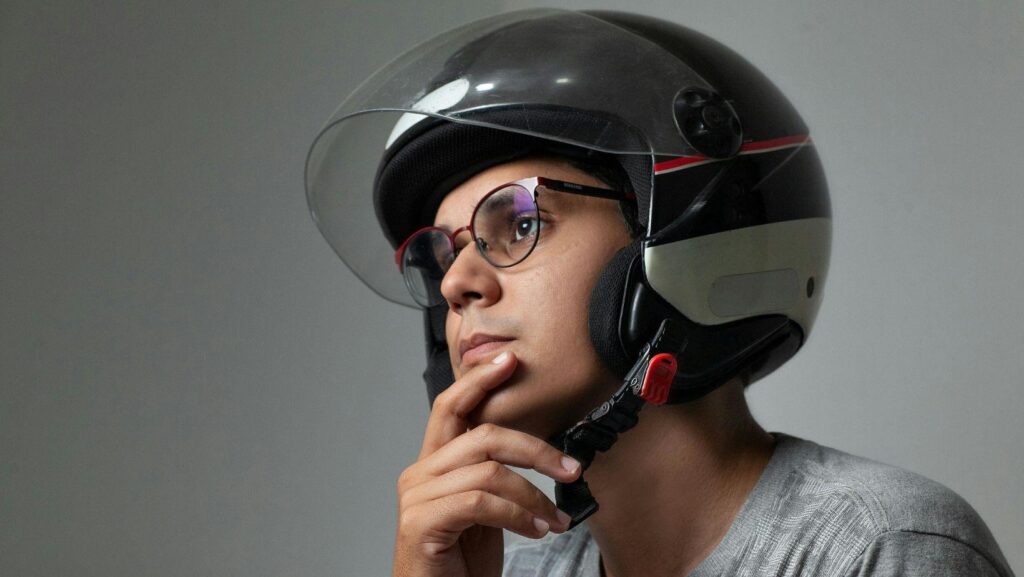
Here's a genuinely strange thing to sit with. A motorcycle impact, the actual moment of collision, unfolds in a fraction of a second, far faster than anyone could consciously react to or even fully process while it's actually happening in real time.
Inside that impossibly small window, a helmet has to do its entire job, absorb force, manage energy, protect a skull and brain from injuries that could otherwise happen almost instantly. There's no second chance, no do-over, just that one brief moment where everything gets decided.
That tiny window is really the whole reason behind California motorcycle helmet laws, and understanding what a helmet is actually doing during that instant helps explain why the requirement exists at all.
What Happens at the Instant of Impact
When a rider's head strikes something, a helmet's outer shell distributes that force across a wider area rather than letting it concentrate on one small point of contact, which alone reduces the intensity of the impact considerably.
Underneath that shell sits energy-absorbing material, usually a foam layer designed specifically to compress on impact, converting some of that force into compression rather than letting it transfer directly and fully into the skull underneath it.
These two components work together in that same brief instant, the shell spreading force outward while the foam absorbs and slows it down, both mechanisms happening simultaneously within a timeframe too short for anyone to consciously register at all.
Your Head Stops Before Your Brain Does
Here's the part that makes head injuries so genuinely dangerous. When a skull stops suddenly, the brain inside it doesn't stop at exactly the same instant, it continues moving briefly, colliding against the interior of the skull itself.
That rapid deceleration, sometimes called acceleration-deceleration injury, is responsible for a lot of the actual damage in a serious impact, separate entirely from whatever direct force struck the outside of the head in the first place.
A helmet's job partly involves slowing that overall deceleration process down, giving the brain a slightly less abrupt stop than it would experience without any protection at all, which can make a meaningful difference in the severity of resulting injury.
Why Fit Matters More Than People Realize
A helmet sitting loosely on someone's head isn't doing its job properly, regardless of how well-built it is. Proper positioning matters enormously, sitting level and snug rather than tilted back or sitting too high off the actual skull underneath.
Sizing affects this directly, since a helmet that's too large can shift or even come off entirely during an impact, exactly the moment it's needed most. Straps need to be properly fastened too, since an unsecured helmet can separate from the head during a crash.
Movement during a ride matters as well, a helmet that shifts around constantly isn't maintaining the consistent positioning it needs to actually perform the way it's designed to during a sudden, unexpected impact.
One Crash Can Be Enough
Here's something a lot of riders don't fully realize. Helmet damage isn't always visible from the outside. The foam inside can compress and lose its protective properties during an impact without any obvious external cracking or visible sign of damage at all.
That means a helmet involved in a significant collision, even one that looks completely fine afterward, may no longer offer the same level of protection it originally did, since its internal structure has already done its job once and used up its capacity.
Continuing to use a helmet after any significant impact essentially means relying on gear that's already been compromised, even if nothing about its outward appearance suggests anything has actually changed since before the crash occurred.
Conclusion
An astonishingly short window, a fraction of a second, is really all the time a helmet ever gets to make a genuine difference, and everything about its construction and proper use is aimed squarely at making that brief moment count.
Understanding how the shell and foam work together, how the brain moves separately from the skull during sudden impact, and why fit and post-crash condition matter helps explain why proper helmet use is about far more than simple legal compliance.
Recognizing just how much rides on that split second helps clarify why getting the details right, fit, condition, positioning, genuinely matters every single time someone gets on a motorcycle, not just on the days it happens to feel important.